English
Colorfastness for Bags: Testing Methods, Specs & How to Avoid Dye Transfer
Created on 03.16
Ever carried a new tote and found stains on your white jeans? It's really frustrating. This problem is about colorfastness. It shows how well a material keeps its color when used.
We'll talk about why keeping your bags looking good is important. Color preservation helps your bags stay bright and professional. Nobody wants a pricey item to fade quickly.
colorfastness
We'll show you how top makers test for color fastness. You'll learn easy ways to stop dye from transferring. Let's get into the details of color fastness to protect your style and brand.
Key Takeaways
- Understand the basic principles of material dye retention.
- Learn about common testing methods like crocking and light tests.
- Identify industry standards for high-quality leather and fabric bags.
- Discover practical tips to stop dye from rubbing off on clothing.
- Ensure your products maintain their original look for years.
- Improve customer satisfaction by choosing durable, tested materials.
Understanding Colorfastness: What It Means for Your Bags
The colorfastness of a bag is how well it keeps its color. It doesn't fade or run when it's exposed to different things. This is key to keeping the bag looking good over time.
Colorfastness includes color retention, dye stability, and fade resistance. These all work together. They help your bag stay bright and new, even after lots of use and different conditions.
Defining Color Retention and Dye Stability
Color retention is when a fabric keeps its color strong. Dye stability is how well the dyes in the fabric resist fading or changing color. This happens when it's exposed to light, water, or other stressors.
A bag with good color retention and dye stability will keep its color and vibrancy. It will stay the same, even with sunlight, washing, or sweat.
Why Colorfastness Matters in Bag Manufacturing
In bag making, colorfastness is very important. It affects the quality and how happy customers are. A bag that fades or changes color fast looks cheap. This can hurt the maker's reputation.
To show why colorfastness is key, let's look at a table. It compares bags with good and bad colorfastness:
Characteristics | Bags with Good Colorfastness | Bags with Poor Colorfastness |
Color Retention | Retains original color intensity | Fades or discolors quickly |
Dye Stability | Resists fading or color change | Fades or changes color easily |
Customer Perception | Perceived as high-quality | Perceived as low-quality |
Real-World Consequences of Poor Fade Resistance
Bags that fade a lot look bad. This is a big problem for brands that focus on looks.
For example, a bag in sunlight a lot will fade fast if it's not light fast. This can hurt the brand's image and trust with customers.
Understanding colorfastness helps manufacturers make better bags. They can focus on keeping colors bright, stable, and resistant to fading.
Essential Colorfastness Testing Methods We Recommend
To check if our bags' colors stay the same, we use several strict tests. These tests see how colors hold up against rubbing, washing, light, and sweat.
Crocking Test for Dry and Wet Rub Resistance
The crocking test checks how well our bags' colors resist rubbing. It's done in both dry and wet conditions to mimic real use.
AATCC 8 and ISO 105-X12 Standards
We stick to AATCC 8 and ISO 105-X12 for crocking tests. These standards help us see how colors move from fabric to other surfaces when rubbed.
How We Interpret Crocking Results
We use a gray scale to rate crocking test results. Ratings range from 1 (poor) to 5 (excellent). A higher score means better rubbing resistance. We aim for a score of 4 or higher for our bags.
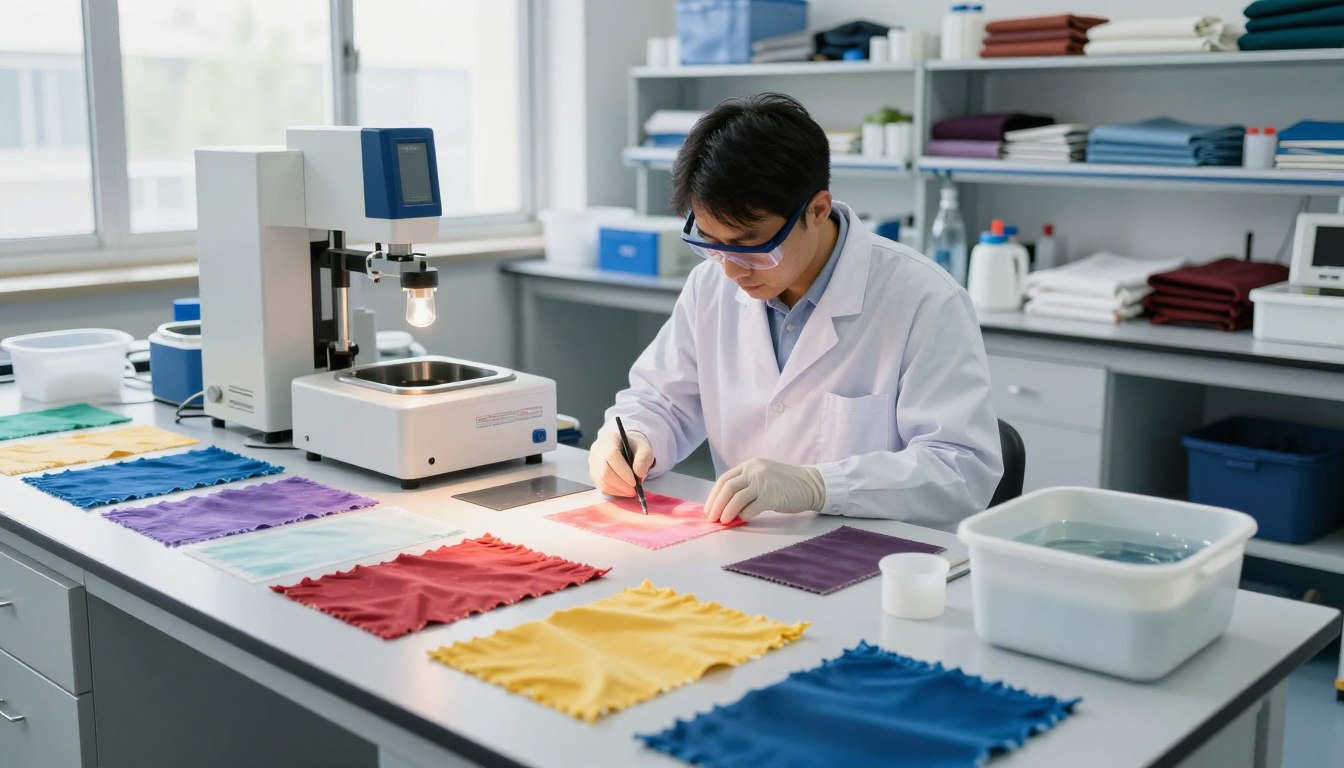
A detailed colorfastness testing laboratory scene focused on various methods for assessing dye stability in fabrics, specifically for bags. In the foreground, a wide table holds multiple test samples of colorful fabrics, each undergoing different testing methods such as water, light, and rubbing tests. A technician in professional attire, meticulously observing the samples with protective eyewear and gloves, is centrally positioned. The middle ground features testing equipment like colorfastness test kits, light sources, and water containers. The background showcases organized shelves filled with textiles and laboratory tools. Natural light streams in through large windows, creating a bright, focused atmosphere that conveys professionalism and precision in textile quality assessment. No text or distractions present.
Washing Durability Tests
Washing tests check if our bags' colors stay the same after washing. These tests mimic the effects of many washes.
AATCC 61 and ISO 105-C06 Procedures
We follow AATCC 61 and ISO 105-C06 for washing tests. These standards guide us in testing how colors hold up to washing.
Test Standard | Description | Rating Scale |
AATCC 61 | Colorfastness to laundering | 1-5 |
ISO 105-C06 | Colorfastness to domestic and commercial laundering | 1-5 |
Light Fastness Testing for UV Exposure
Light fastness tests show how our bags' colors handle UV light. This test mimics sunlight's effects on fabric.
AATCC 16 and ISO 105-B02 Methods
We use AATCC 16 and ISO 105-B02 for light fastness. These standards help us check how colors resist light.
Perspiration Fastness Evaluation
Perspiration tests ensure our bags' colors don't fade or run with sweat. This is key for bags used in sweaty conditions.
By using these detailed tests, we ensure our bags are colorfast and durable. This means our customers receive products that maintain their appearance over time.
Industry Specifications: Adhering to Colorfastness Standards
To maintain the aesthetic appeal of bags, it is essential to adhere to colorfastness standards. Colorfastness refers to a material's ability to resist color change or dye transfer when exposed to various elements. It is imperative for manufacturers to ensure their bags successfully pass these tests.
Explanation of the Gray Scale Rating System
The gray scale rating system evaluates the color retention of textiles, such as bags. It involves comparing the tested sample against a standard gray scale to determine the extent of color alteration or staining. Ratings range from 1 to 5, where a rating of 5 signifies no discernible change or staining.
Understanding the gray scale is vital for manufacturers to meet industry standards. For further information on colorfastness testing, please refer to Testex Textile. They provide comprehensive details on testing methodologies.
Acceptable Colorfastness Grades by Material Type
Different materials require different colorfastness grades. It is important for manufacturers to be aware of these to adhere to industry standards.
Leather and Premium Bag Standards
Leather and high-end bags necessitate a high colorfastness grade. This is due to their expected longevity and aesthetic appeal.
Canvas and Textile Requirements
Canvas and other fabric bags have their own specific regulations. The colorfastness grade for these can vary depending on their intended use and the manufacturer's specifications.
Synthetic Materials Benchmarks
Synthetic materials used in bags also have established colorfastness benchmarks. These are determined by the material's type and the bag's intended function.
Here's a quick look at the colorfastness grades for different materials:
Material Type | Minimum Colorfastness Grade | Typical Usage |
Leather | 4.5 | Premium bags, luxury goods |
Canvas/Textile | 4 | Casual bags, everyday use |
Synthetic Materials | 3.5 | Budget-friendly bags, promotional items |
U.S. Market Expectations and Compliance
In the U.S., people expect bags to be high-quality and last long. Following colorfastness standards is key for makers. It keeps customers happy and helps brands stay good.
Manufacturers need to keep up with new standards and tests. This helps them stay competitive and follow the rules.
Key Factors That Impact Fabric Color Durability
Fabric color durability is influenced by many factors. These include dye selection and environmental conditions. Knowing these factors is key for making high-quality, colorfast fabrics.
Dye Selection and Application Techniques
The type of dye and how it's applied greatly affect fabric color. Different dyes handle light, washing, and sweat differently. For example, reactive dyes work well on cotton because they bond strongly with the fiber.
Dye selection is contingent upon the fiber type, fabric application, and the desired color. The method of dye application, such as padding or printing, also plays a role. It is crucial to ensure uniform dye application and effective fixation to maintain vibrant colors.
Material Properties and Fiber Characteristics
The material's properties and fiber characteristics are key to color durability. Natural fibers like cotton, wool, and silk react differently to dyes than synthetic ones like polyester and nylon. The fiber's surface texture, porosity, and chemical composition affect dye binding.
Cotton does well with reactive dyes, while silk needs acid dyes. Knowing these helps choose the right dye and treatment for better color.
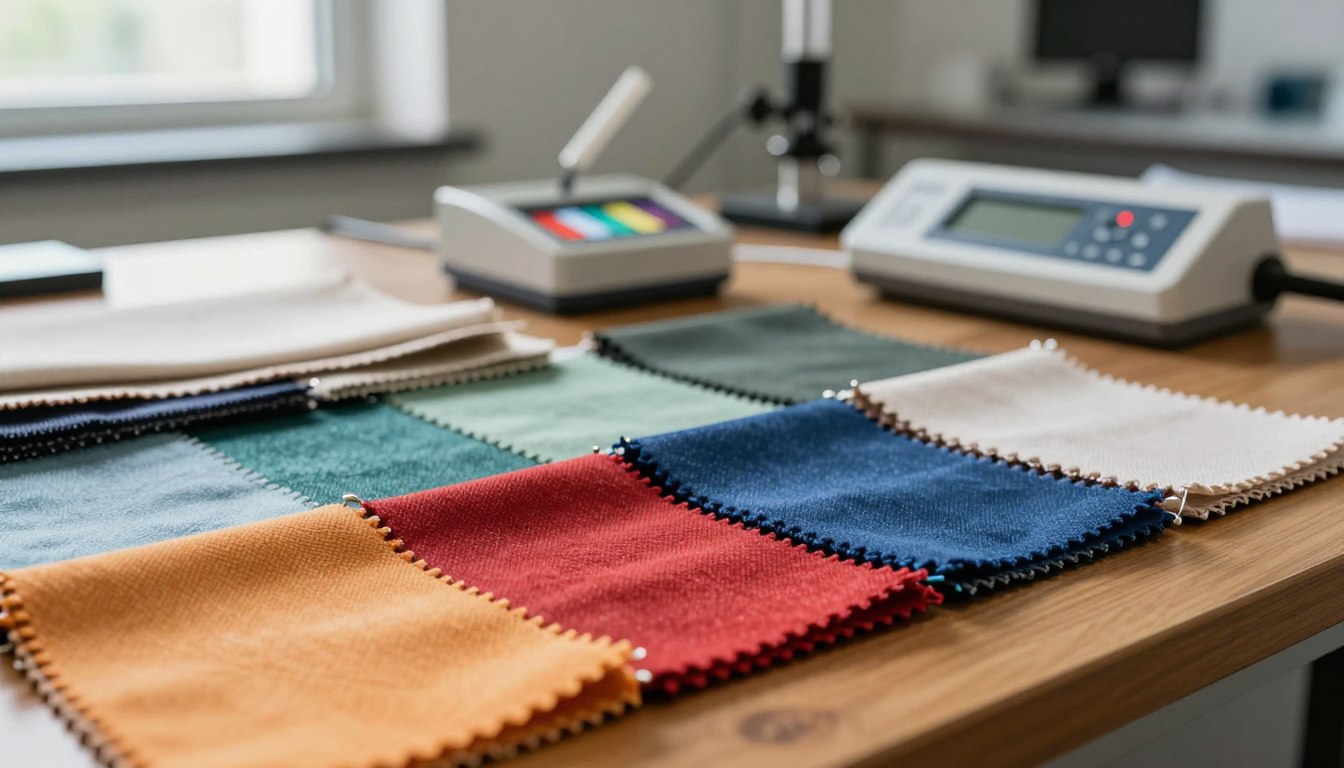
A close-up view of a variety of fabric swatches displayed on a wooden table, showcasing different colors and textures that highlight their durability. In the foreground, focus on vibrant, colorfast fabrics securely pinned in place, with threads and fibers visible for detail. The middle ground features a subtle array of testing equipment, like a colorimeter and light exposure tools, representing the scientific aspect of color durability tests. The background softly fades to a blurred laboratory setting, hinting at a high-tech environment. Soft, natural lighting filters in from a window, casting gentle shadows that create an inviting atmosphere. The overall mood is professional and informative, emphasizing the key factors that impact fabric color durability without any people present.
Environmental Stressors and Usage Conditions
Environmental factors like sunlight, moisture, and temperature affect fabric color. UV rays can fade colors, while sweat and washing can cause color bleeding. How the fabric is used and cared for matters too.
Fabrics used outdoors or washed often face more color loss. To fight this, makers can suggest proper care and use color-protecting finishes.
How to Avoid Dye Transfer and Maintain Color Quality
To keep your bags looking bright, focus on both making them and taking care of them. We at our company make sure to keep the colors looking great. We do this by testing a lot and following the best practices in the industry.
Manufacturing Best Practices We Follow
We make our bags to last, focusing on colorfastness. We pick dyes that stay strong and don't fade. We also use special dyeing methods to make sure colors are even and colors don't mix.
We also test how our bags hold up to washing. These tests help us see how our bags will do in different situations. This way, we can make our process even better.
Test Type | Description | Frequency |
Crocking Test | Evaluates dry and wet rub resistance | Monthly |
Washing Durability Test | Assesses colorfastness after washing | Quarterly |
Light Fastness Test | Measures color retention under UV exposure | Bi-Annually |
Care and Maintenance Guidelines for Consumers
It's important for you to take care of your bags too. The right care can keep the colors looking good.
Proper Cleaning Methods
When you clean your bag, use a soft cloth and mild soap. Stay away from strong chemicals or rough stuff that can hurt the fabric and fade the colors.
Storage Recommendations to Prevent Fading
Keep your bag in a cool, dry spot, out of the sun. Using a dust bag or cloth bag to store your handbag can also help protect it from damage.
What to Do When Dye Transfer Happens
If you see dye transfer, act fast. For small spots, clean it with a damp cloth. For bigger problems, get help from a pro who knows how to clean your bag's material.
Conclusion
Colorfastness is key in bag making. It affects how long and how well a bag looks. Knowing how to test and improve colorfastness helps make better bags.
There are different ways to test colorfastness, like crocking and washing tests. These tests check if colors stay the same. Following industry standards helps keep colors bright and true.
For bag makers, focusing on colorfastness is essential. It helps make bags that look great and last long. This way, our bags stay colorful and vibrant, even when they face tough conditions.
FAQ
What exactly is colorfastness and why is it important for our bags?
Colorfastness means a material doesn't fade or run when exposed to light, moisture, or friction. For us and brands like Coach, keeping colors bright is key. This way, your bag stays vibrant for months, not just days.
Without it, your clothes might stain, and your bag could lose its charm too soon.
How do we test for dye transfer or "crocking" in bag materials?
We test for dye transfer using the crocking test, following AATCC 8 or ISO 105-X12 standards. This involves rubbing a white cloth against the bag material, dry and wet. It checks if any color moves.
This step is crucial for us to ensure your bag's color stays true. So, a dark leather tote won't stain your white blouse.
Will my fabric bag lose its color after I clean it?
We test washing durability using the AATCC 61 procedure. It simulates many home washes to keep colors bright. Brands like Patagonia use top-notch dyes and methods to keep their gear looking great, even after lots of use and cleaning.
How do bags resist fading when exposed to constant sunlight?
We test fade resistance with light fastness tests, following AATCC 16 or ISO 105-B02. These tests use strong UV light to check if the fabric's color stays strong. This is key for outdoor and daily-use bags that get lots of sun.
What is the Gray Scale and how does it relate to bag quality?
The Gray Scale is a rating system (1 to 5) for color change and staining tests. For top brands like Tumi, a high rating is crucial. A 4 or 5 means the material's color stays true, with little to no change or transfer.
What are the main factors that impact the color durability of our fabrics?
Many things affect color durability, like the dye and how it's applied. The type of fiber also matters, whether it's synthetic or natural. Environmental factors like humidity and heat can also affect dye stability. So, we choose the right dye for each material carefully.
What can I do to prevent dye transfer from my bag onto my clothes?
To stop dye transfer, follow care guidelines. Avoid letting your bag touch light-colored clothes when it's wet. We use special treatments to keep colors bright, but you can also use protector sprays on suede or canvas.
Store your bags in cool, dry places away from sunlight to keep colors looking their best.
Contact
Leave your information and we will contact you.


