English
What Is MOLLE? PALS Spacing, Webbing Specs & OEM Customization Tips
Created on 03.16
Have you ever noticed the heavy-duty nylon webbing on tactical backpacks and vests? It's called the MOLLE system. It changed how we carry gear during tough missions. It was made for the military, letting us attach pouches and tools with ease and strength.
So, what is molle really? It means Modular Lightweight Load-carrying Equipment. It's a new way to carry heavy stuff, better than old methods.
Now, we can make our gear fit any task or adventure. Flexibility is key for those who need gear that can change fast.
What is MOLLE?
We'll dive into PALS spacing and webbing details. Our goal is to help you customize your gear better. Knowing these details makes your equipment reliable and strong in the field.
Key Takeaways
- MOLLE stands for Modular Lightweight Load-carrying Equipment and defines modern tactical gear.
- The system relies on PALS webbing to create a secure and modular attachment grid.
- Customization allows us to configure pouches and accessories based on specific mission needs.
- Standardized spacing ensures compatibility across different brands and equipment types.
- OEM manufacturers must follow strict specifications to maintain gear durability and strength.
- Modern gear has transitioned from strictly military use to popular civilian and outdoor applications.
What Is MOLLE and Why It Revolutionized Tactical Gear
MOLLE, or Modular Lightweight Load-carrying Equipment, transformed the way tactical gear is used by enabling users to customize their equipment more extensively than before.
MOLLE's flexibility and adaptability are its core strengths, making it simple to attach or detach pouches and accessories. This streamlines the process of configuring gear for various requirements.
The Origin and Development of the MOLLE System
The U.S. military developed MOLLE as a replacement for ALICE, aiming for a modular and adaptable system that could address diverse operational demands.
MOLLE uses a webbing pattern called PALS. This pattern allows pouches and accessories to attach securely. This innovation has changed tactical gear design.
How MOLLE Changed Military and Civilian Tactical Equipment
MOLLE has greatly impacted military and civilian gear. Military personnel can now customize their load-outs for specific missions. This is thanks to MOLLE's flexibility.
Civilian users, like law enforcement and outdoor enthusiasts, also benefit. They can easily adjust their gear. This makes MOLLE a top choice for versatile and reliable equipment.
Core Components: Webbing Platforms and Attachment Pouches
The MOLLE system has two main parts: webbing platforms and pouches. Webbing platforms are found in vests, backpacks, and more. They offer a standard spot for attaching pouches and accessories.
Attachment pouches have a PALS webbing pattern. This pattern matches the webbing platform. This design lets users create a gear setup that fits their needs.
Knowing MOLLE's core components helps users get the most out of it. It leads to a highly adaptable and customizable tactical gear setup.
Understanding PALS Webbing: The Foundation of MOLLE
PALS webbing is at the core of the MOLLE system. It's a grid-like structure that makes it easy to set up gear in many ways. We'll look into what PALS webbing is, how it works, and the rules that guide its use.
What PALS Stands For and Its Function
PALS stands for Pouch Attachment Ladder System. It's made to hold pouches and other gear on vests, backpacks, and more. The PALS system lets users change their gear to fit their needs.
Tactical gear experts say, "The PALS system has changed how military and civilian people carry their stuff. It gives them flexibility and the chance to customize their gear."
"The PALS system marked a big change towards modularity in tactical gear. It lets users adjust their gear for different missions."
Standard PALS Spacing Specifications
The PALS system's success depends on its spacing. Having standards is important for making sure different gear works together well.
Horizontal Spacing: 1.5-Inch Standard
The space between PALS webbing rows is 1.5 inches. This is key for making sure pouches and attachments fit right on vests or backpacks.
Vertical Spacing: 1-Inch Standard
The space between rows is 1 inch. This standard helps attach gear in a way that's consistent and reliable. It makes sure the load is spread out and easy to get to.
PALS Spacing | Measurement |
Horizontal Spacing | 1.5 inches |
Vertical Spacing | 1 inch |
PALS Grid Layout and Row Configuration
The PALS grid layout is very adaptable. It has rows of webbing that can be set up in many ways. This lets users attach a variety of pouches and accessories.
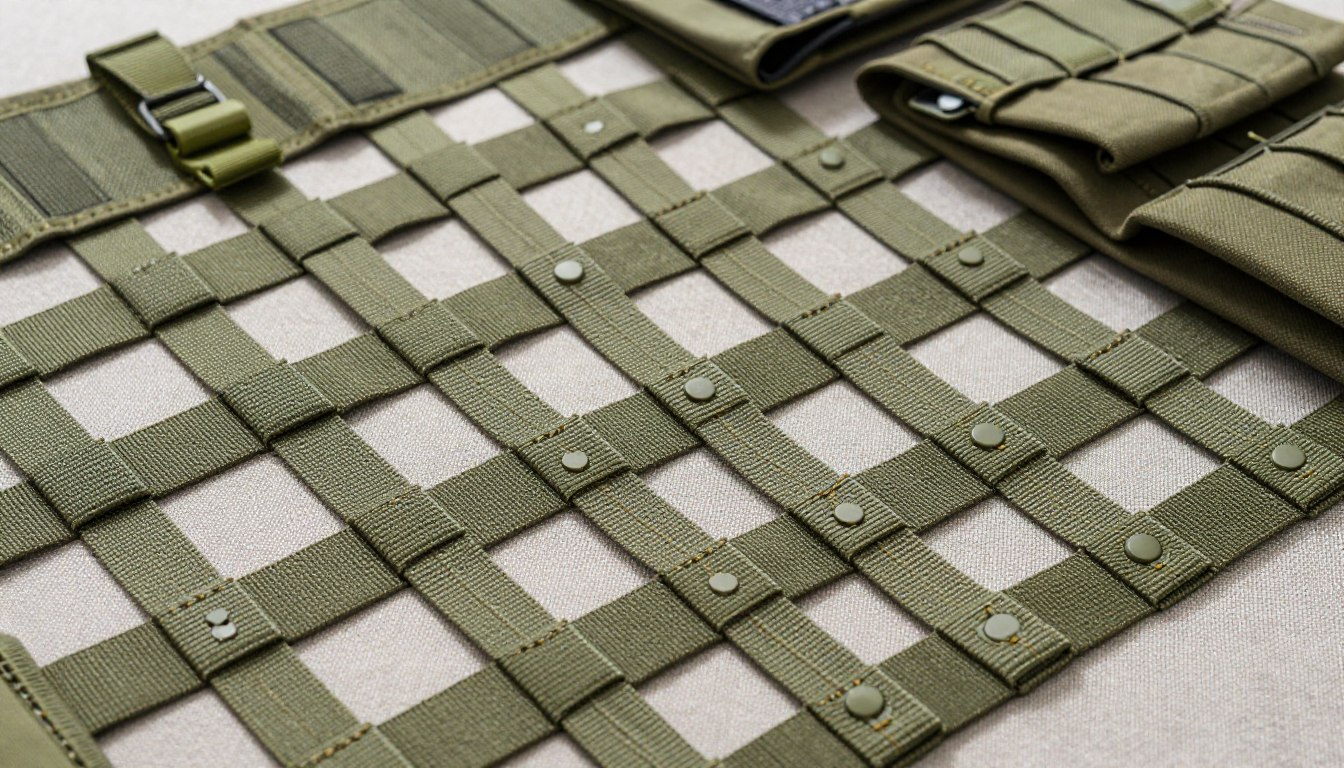
A close-up, detailed view of a PALS (Pouch Attachment Ladder System) webbing grid layout, showcasing its characteristic rows and columns of reinforced nylon straps. The foreground displays a section of webbing with stitching details and attachment points, emphasizing the robust construction and flexibility for modular attachments. In the middle ground, various gear pouches are partially attached, illustrating the functionality of the layout. The background features a neutral textured fabric surface to highlight the webbing design. The scene is lit with soft, diffused lighting to minimize shadows, with a slight overhead angle capturing the depth and dimensionality of the webbing. The atmosphere is professional and informative, suitable for a technical article on MOLLE systems.
Knowing about PALS webbing and its setup helps users get the most out of their MOLLE gear. It makes their tactical equipment more efficient and effective.
MOLLE Webbing Specifications and Material Standards
Knowing the details of MOLLE webbing is key for makers and users. The MOLLE system works well because of its webbing's quality and specs.
Webbing Dimensions: Width and Thickness Requirements
The size of MOLLE webbing matters a lot. It needs to be the right width and thickness for it to work well and last long. Usually, it's 1 inch (25.4 mm) wide.
Standard Webbing Dimensions:
Specification | Measurement |
Width | 1 inch (25.4 mm) |
Thickness | 0.13 inches (3.3 mm) |
Material Composition: MIL-SPEC Nylon and Alternatives
MOLLE webbing is mostly nylon because it's strong, lasts long, and doesn't wear out easily. MIL-SPEC nylon is the top choice for military use, promising high quality.
Other materials might be used for certain jobs. They can have different strengths, weights, and how well they handle the weather.
Stitching Patterns: Box-X and Bartack Standards
The way MOLLE webbing is stitched is very important. The Box-X stitching pattern is often picked because it's strong and doesn't wear out quickly.
Bartack stitching is also a standard. It's used to make sure stress points are extra strong.
Weight Capacity and Load-Bearing Ratings
The weight MOLLE webbing can hold is a big deal in its design and use. Makers usually give a weight limit for their products.
MOLLE Gear Applications: Backpacks, Vests, and Accessories
MOLLE has changed the way we carry gear, from backpacks to vests and more. Its design lets us customize our gear for any need. This makes MOLLE great for both the military and civilians.
MOLLE Backpacks and Pack Customization
MOLLE backpacks let you customize your gear. They have PALS webbing for adding pouches and accessories. You can add MOLLE-compatible pouches for extra storage or special needs.
Tactical Vests and Plate Carriers with MOLLE
Tactical vests and plate carriers with MOLLE webbing are flexible. They let you carry important gear while staying protected. You can add MOLLE attachments like magazine pouches and first-aid kits.
Popular MOLLE Pouches and Attachments
Magazine Pouches and Admin Panels
Magazine pouches keep extra ammo safe. Admin panels store documents, maps, or other essentials. These are easy to use and adjust to your needs.
Hydration Carriers and Utility Pouches
Hydration carriers keep you hydrated during long missions. Utility pouches store extra gear. Both are key to a well-organized MOLLE setup.
MOLLE Compatibility: Ensuring Proper Fit and Function
It's important that MOLLE pouches and attachments fit well with your gear. The right fit ensures safety and function. The wrong fit can cause accidents.
Gear Type | MOLLE Compatibility | Primary Use |
Backpacks | Yes | Carrying larger loads and equipment |
Tactical Vests | Yes | Carrying essential gear and ammunition |
Magazine Pouches | Yes | Storing and accessing ammunition |
Hydration Carriers | Yes | Staying hydrated during operations |
"The MOLLE system's flexibility is its greatest asset, allowing users to adapt their gear to any situation."
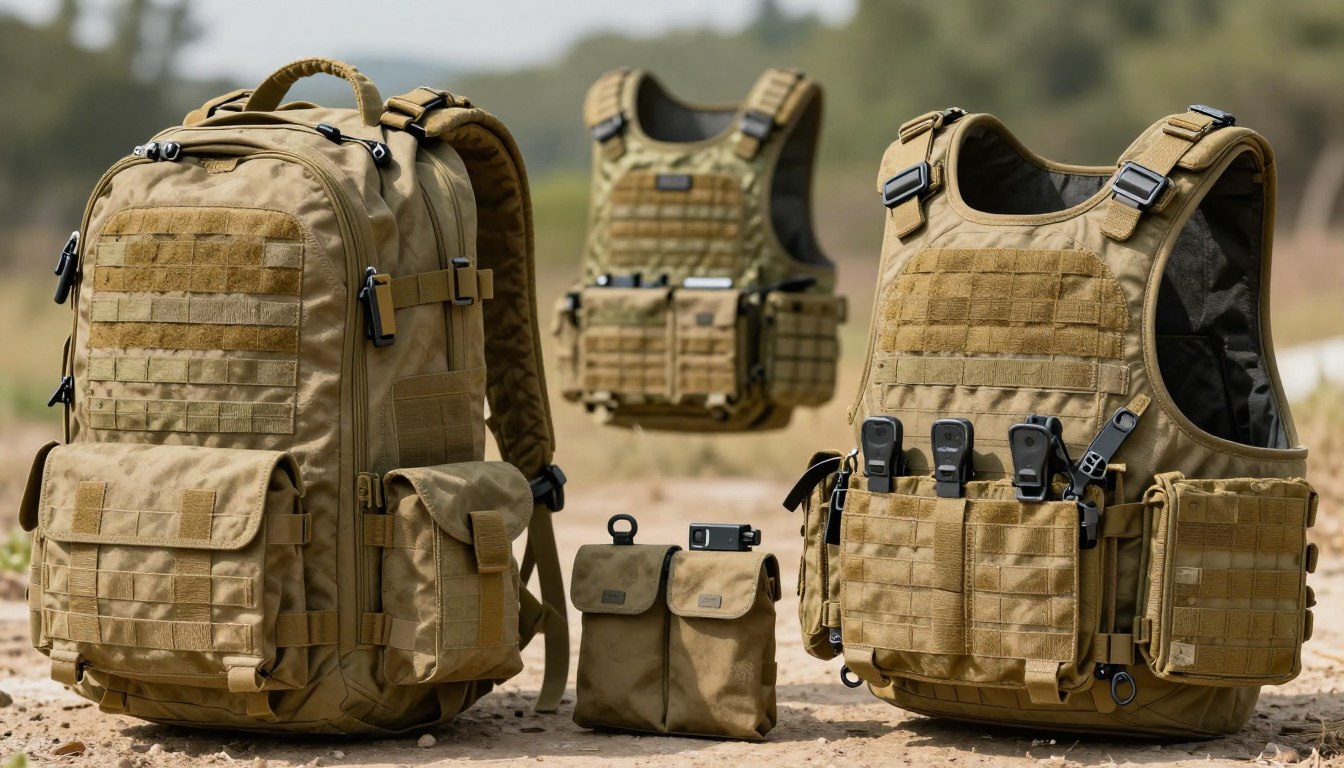
A dynamic display of MOLLE-compatible gear, featuring a rugged tactical backpack and a combat vest adorned with various pouches and accessories. In the foreground, highlight the intricate webbing and PALS spacing on the vest, emphasizing the attachment points for customization. The middle ground showcases a range of MOLLE-compatible accessories, like utility pouches and hydration carriers, arranged artistically. In the background, a blurred outdoor setting suggests adventure and functionality, with soft natural lighting that highlights the texture of the fabric. Position the scene at a slight angle, simulating a three-quarter view that adds depth. The mood is practical and rugged, capturing the essence of outdoor and tactical applications. No text or watermarks should be present in the image.
OEM Customization: Manufacturing MOLLE Gear to Your Specifications
OEM customization for MOLLE gear is changing how we see tactical equipment. It allows manufacturers to create products that meet specific needs, which is beneficial for both military and civilian users.
Key Considerations for Custom MOLLE Product Development
When making custom MOLLE products, several things are important. You need to know how it will be used, pick the right materials, and think about the user. This ensures the product meets the needed standards.
Understanding the Intended Use is key. Is it for the military, law enforcement, or outdoor fans? Each group needs different features and durability.
Webbing Placement Strategy and Pattern Design
Where and how webbing is placed on MOLLE gear is very important. A good webbing pattern helps attach and spread out accessories well.
A leading manufacturer says, "The webbing pattern should use space well and make sure attachments are secure."
"The key to a successful MOLLE system is in its webbing configuration. It must be both functional and durable."
Material Selection Based on Use Case
Choosing the right material for custom MOLLE gear is crucial. The material depends on how the gear will be used.
Indoor vs Outdoor Applications
For outdoor use, materials like nylon or polyester are best because they resist weather. For indoor use, focus on durability and easy cleaning.
Military-Grade vs Commercial-Grade Options
Military-grade materials are stronger and meet special standards. Commercial-grade options might be less expensive but still good.
Material | Outdoor Use | Indoor Use | Military-Grade |
Nylon | Yes | Yes | Yes |
Polyester | Yes | Yes | No |
Canvas | No | Yes | No |
Quality Control Standards and Testing Protocols
Ensuring custom MOLLE gear quality means strict testing. This includes load tests, material tests, and checks on how it works.
MOQ Requirements and Production Lead Times
Knowing the MOQ and production times is key for planning. These can change a lot between makers.
By thinking about these points and working with a maker, you can make custom MOLLE gear that meets your needs. It will also improve how things work.
Conclusion
We've looked into the MOLLE system, learning what it is and how it changed tactical gear. The MOLLE system, with its PALS webbing and customizable parts, is key in both military and civilian gear.
Understanding MOLLE webbing's specs and materials shows its strength and flexibility. It's great for backpacks, vests, and more. MOLLE gear lets users customize easily.
For makers, customizing MOLLE gear meets specific needs. Knowing MOLLE well is crucial for its full use.
In conclusion, MOLLE has set a high standard for tactical gear. It offers a modular and adaptable solution for many uses.
FAQ
What exactly is the MOLLE system and how does it work?
MOLLE stands for Modular Lightweight Load-carrying Equipment. It's a system for attaching pouches and tools to vests or packs. We weave straps through the webbing to create a secure setup that can change for any mission or adventure.
What is the difference between MOLLE and PALS?
MOLLE and PALS are often used together, but they're not the same. PALS is the grid of webbing. MOLLE is the equipment that uses this grid. This means we can use gear from different brands together, like Maxpedition pouches on 5.11 Tactical packs.
What are the standard spacing specifications for PALS webbing?
We follow strict standards for PALS webbing. The horizontal spacing is 1.5 inches, and vertical spacing is 1 inch. This layout makes the system stable and secure.
What makes a high-quality molle backpack durable?
Durability comes from materials and construction. Look for MIL-SPEC nylon, like Cordura 500D or 1000D. The stitching, called bartack, also matters. It keeps the webbing from ripping under heavy loads.
Are there different types of molle attachments available?
Yes! We use many types of MOLLE accessories. There are magazine pouches, admin panels, and utility pouches. Some use stiffened systems, while others use metal snaps or plastic clips.
Can we customize the placement of webbing for OEM projects?
Yes, we can. For OEM projects, we design the webbing placement. We can choose between laser-cut platforms for a lightweight look or traditional webbing for ruggedness.
How do we ensure MOLLE compatibility when buying gear from different brands?
Check the PALS spacing (1.5" x 1"). Most brands like Crye Precision or Condor Outdoor follow these specs. Make sure the pouches fit well on the backpack or vest.
What are the weight capacity and load-bearing ratings for this gear?
The weight capacity depends on the stitching and material. A single loop can hold a lot of weight. In tactical environments, we trust it to carry heavy loads without failing.
Contact
Leave your information and we will contact you.


