English
MOLLE System Explained: How Modular Attachments Work (OEM Checklist)
Created on 03.16
We all love gear that keeps up with us. It's key to have equipment that fits different places without breaking. The MOLLE system changed how we carry things on the go.
MOLLE system
Knowing how MOLLE attachments fit together makes our gear better. This guide shows you how these connections work. We also have a detailed OEM checklist for top-notch quality.
Choosing the right tactical gear should make you feel sure. Reliability and strength are crucial for any outdoor task. Let's explore these modular solutions and how they help your gear.
Key Takeaways
- Learn the basic mechanics of modular webbing for tactical gear.
- Understand how to secure pouches using standard straps.
- Review our OEM checklist for quality manufacturing standards.
- Discover why modularity improves efficiency in the field.
- Identify the best practices for arranging gear on a vest or pack.
- See how durable materials contribute to long-term reliability.
What is the MOLLE System and Why It Matters
The Modular Lightweight Load-carrying Equipment (MOLLE) system is a big deal for military and tactical fans. It's a system that lets you change your gear as you need to.
MOLLE is key in today's tactical gear. It lets you adjust your equipment for different situations. This is important because needs can change fast in dynamic settings.
Origins and Military Development
The U.S. military created MOLLE to replace ALICE. They wanted a system that was better and more flexible. MOLLE was made to be easy to customize and grow.
MOLLE started because the military needed something better. They wanted a system that could change and grow. This led to the PALS webbing, a big part of MOLLE. The PALS grid lets you add different pouches and accessories, making it very useful.
Core Benefits of Modular Tactical Gear
The MOLLE system has many benefits:
- Modularity: You can change your gear for different missions.
- Flexibility: You can add many pouches and accessories.
- Efficiency: It makes setting up and changing your gear easier.
These benefits are very important for tactical work. With MOLLE, you can change your gear quickly for different situations. It's a must-have for military and tactical teams.
MOLLE vs. ALICE and Other Attachment Systems
MOLLE and ALICE are different in many ways. MOLLE is more flexible and modular than ALICE. To learn more about MOLLE, visit https://www.511tactical.com/how-does-molle-work.
The main difference is how they attach. MOLLE uses PALS webbing for more flexibility. ALICE has a stiffer system that's harder to change.
How the MOLLE System Works
The MOLLE system uses a grid and attachment method. It lets users tailor their gear to their needs.
The PALS Webbing Grid Structure
The PALS webbing grid is key to the MOLLE system. It has rows of webbing stitched onto a base.
Webbing Specifications and Measurements
The PALS grid has 1-inch wide webbing, 1 inch apart. This setup makes it flexible and compatible with many attachments.
Row and Column Configuration
The grid's rows and columns offer strong attachment points. They ensure attachments are secure and evenly spread.
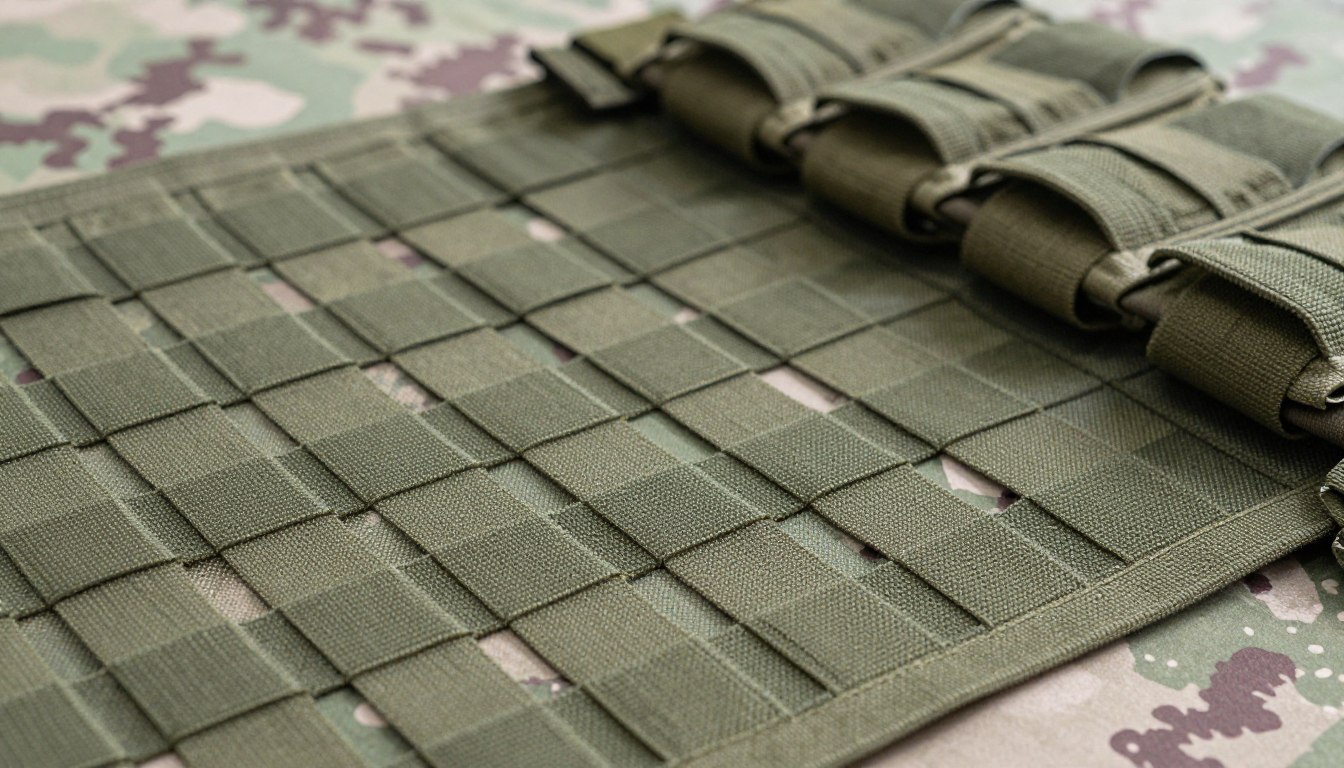
A detailed close-up of a MOLLE webbing grid structure, showcasing the intricate rows of nylon straps woven together. The foreground features a section of the webbing highlighted with subtle shadows, emphasizing the texture and durability of the material. In the middle ground, additional layers of webbing can be seen, demonstrating potential attachment points, complemented by modular pouches and gear arranged neatly. The background consists of a soft-focus camouflage pattern that enhances the military context without being overpowering. Use natural lighting to create a realistic and professional atmosphere, capturing the utility and versatility of the MOLLE system. The image should convey a sense of functionality, order, and readiness, ideal for educational purposes.
The Weaving Attachment Method
The weaving method is simple yet effective. It secures MOLLE accessories to the grid by weaving straps through it.
Step-by-Step Attachment Process
To attach an accessory, align the straps with the grid. Then, weave them through for a snug fit.
Securing Mechanisms and Snap Fasteners
Many attachments have snap fasteners for extra security. These prevent accidental detachment, giving users peace of mind.
Weight Distribution and Load Management
Even weight distribution is vital in the MOLLE system. It keeps users comfortable and mobile.
Effective load management places heavy items near the body. This balances weight and reduces fatigue, improving performance.
MOLLE Components and Attachments
The MOLLE system is known for its wide range of parts and accessories. These parts are made to be very flexible, letting users tailor their gear to their needs.
MOLLE Webbing and Base Platforms
The base of any MOLLE system is its webbing and platforms. They serve as spots to attach pouches and accessories.
MOLLE Backpack Systems
MOLLE backpacks have built-in webbing. This lets users add pouches and accessories as needed. Their flexibility makes them great for many tasks.
Tactical Vests and Plate Carriers
Tactical vests and plate carriers are key parts of MOLLE systems. They offer a place to attach MOLLE pouches and other gear. This helps users carry what they need.
Belt Systems and Leg Platforms
Belt systems and leg platforms add more spots for MOLLE gear. They're good for spreading out weight and getting to gear easily.
MOLLE Pouches and Accessories
MOLLE pouches and accessories show the system's flexibility. There's a wide range of pouches for different uses.
Magazine and Ammunition Pouches
Magazine and ammunition pouches are vital for tactical users. They give quick access to ammo and keep it safe.
Medical and First Aid Pouches
Medical and first aid pouches are key for those carrying medical supplies. They're made to be easy to reach and organized.
Utility, Admin, and Hydration Pouches
Utility, admin, and hydration pouches meet many needs. They range from carrying documents to storing water. This variety lets users tailor their MOLLE setup.
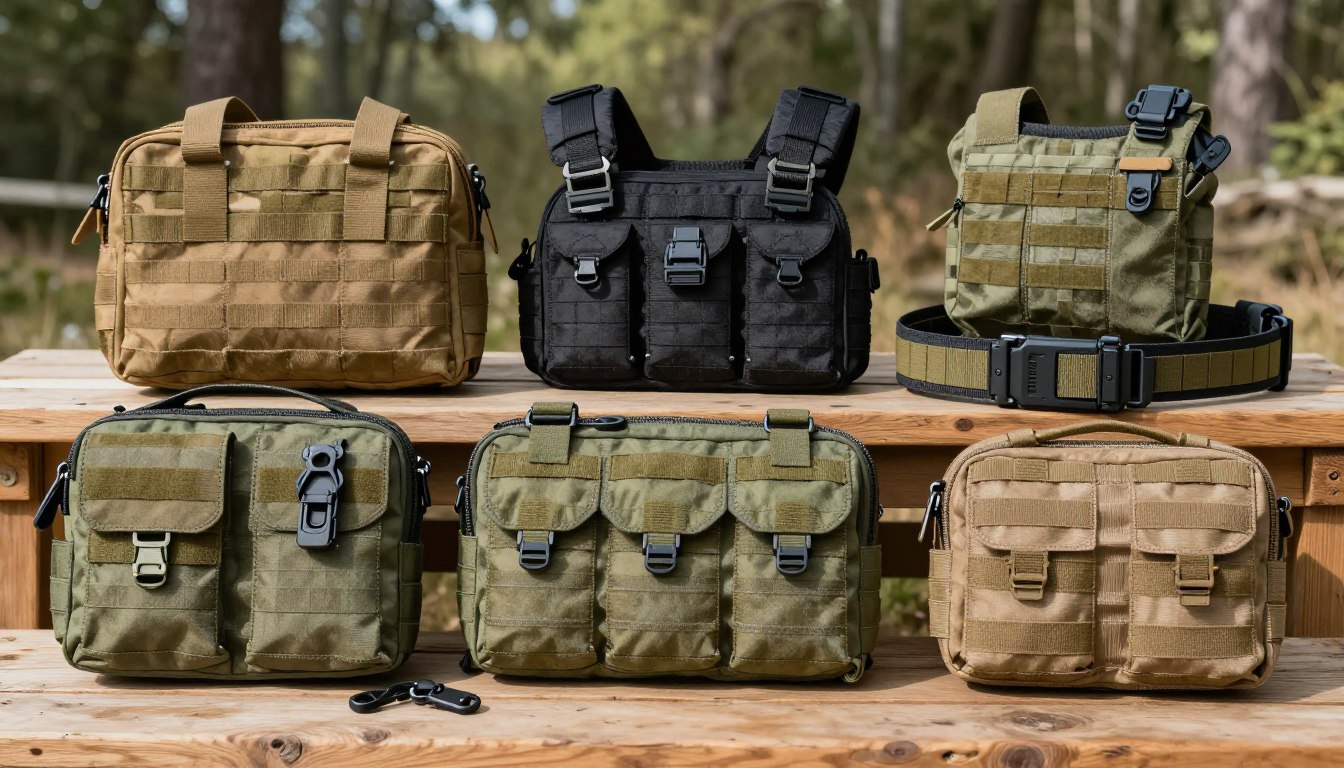
A detailed display of MOLLE pouches and accessories arranged on a wooden surface. In the foreground, various pouches in different sizes and colors, showcasing attachment points and modular capabilities, like molle straps and quick-release clips. The middle ground features additional accessories such as utility pouches, hydration carriers, and tactical belts, neatly organized to highlight their functionality. The background should be softly blurred, featuring an outdoor environment to evoke a sense of adventure and practicality. The lighting is natural, simulating sunlight filtering through trees, creating soft shadows and adding depth. The mood is professional and informative, aimed at illustrating the versatility and modularity of MOLLE components for tactical uses.
MOLLE Compatible Gear Selection Criteria
Choosing MOLLE compatible gear involves several factors. Consider the use, durability, and weight distribution needed.
Component | Considerations | Benefits |
MOLLE Backpacks | Size, material, comfort | Versatility, durability |
MOLLE Pouches | Purpose, size, attachment method | Customization, accessibility |
Tactical Vests | Protection level, comfort, MOLLE compatibility | Protection, modularity |
Knowing the different parts and attachments of the MOLLE system helps users create a customized and effective gear setup. This setup meets their specific needs.
OEM Quality Standards and Manufacturing Checklist
Making MOLLE gear that meets military specs is a big job. It needs a deep understanding of OEM quality standards. This is key for its use in tactical and military settings.
Material Requirements for MOLLE Gear
The materials used in MOLLE gear are very important. Choosing the right materials ensures it's durable and works well.
Webbing Material Standards and Specifications
The webbing in MOLLE gear must be strong and durable. High-strength nylon is often used. It resists wear and can handle heavy loads.
Thread Type and Stitching Requirements
The thread for stitching MOLLE gear must match the material. It also needs to be strong against stress. Heavy-duty threads that don't break easily are a must.
Hardware and Fastener Quality Standards
Components like buckles and clips must be made from high-quality materials. They need to resist corrosion and last long.
Dimensional Accuracy Checklist
Getting the dimensions right is key. It ensures MOLLE gear parts fit and function correctly.
PALS Grid Spacing Tolerances
The PALS grid spacing must be precise. This ensures attachments fit securely and easily.
Webbing Width and Thickness Standards
The webbing's width and thickness must follow certain standards. This ensures it's strong and compatible.
Attachment Point Positioning
Where attachment points are placed is very important. It makes sure gear attaches securely and correctly.
Durability and Load Testing Standards
Durability tests are vital. They check if MOLLE gear can handle the stresses of use.
Tensile Strength Requirements
MOLLE gear must be strong enough to handle heavy loads. It must meet specific tensile strength standards.
Abrasion and Weather Resistance Testing
It's not just about strength. MOLLE gear also needs to resist wear and weather. Testing for these is crucial.
Quality Control and Compliance Verification
A strict quality control process is needed. It ensures MOLLE gear meets the required standards.
Inspection Points and Procedures
Regular checks are essential. They verify that MOLLE gear meets quality and safety standards.
Military Specification Compliance
For military use, MOLLE gear must follow military specs. This includes all relevant standards and tests.
Conclusion
Understanding the MOLLE system is key for those who use and make tactical gear. It offers a flexible and effective way to carry important items. We've looked at the main benefits, its parts, and why sticking to quality standards is important.
Following the advice in this article helps users make sure their MOLLE gear is tough and works well. It also helps makers know what materials, sizes, and tests are needed for MOLLE parts.
The MOLLE system is still a big deal in military and outdoor gear, thanks to its flexibility and dependability. Knowing how the MOLLE system works helps us see its worth. It guides us in choosing and using MOLLE-compatible gear wisely.
FAQ
What exactly is the MOLLE system and why is it the industry standard?
The MOLLE system, or Modular Lightweight Load-carrying Equipment, allows us to customize our gear. It uses a PALS grid for attaching pouches to equipment. This makes our loadout modular and mission-specific, whether it's a 5.11 Tactical plate carrier or a Mystery Ranch pack.
How do we properly secure MOLLE pouches to a tactical vest or backpack?
To keep MOLLE pouches secure, we weave the straps through the webbing. Then, we go back through the pouch's webbing. This creates a strong connection that keeps the pouches in place during activity.
What is the difference between the MOLLE system and the older ALICE system?
The MOLLE system is better than ALICE for stability and comfort. MOLLE uses nylon straps, not metal clips, for even weight distribution. This makes it more comfortable to wear.
Are all MOLLE attachments compatible across different brands?
Yes, most MOLLE attachments work together. The PALS grid is standardized, so gear from different brands fits well. For example, a Condor Outdoor pouch fits on a Crye Precision belt easily.
What should we look for when evaluating the quality of a MOLLE backpack?
Look for durable MOLLE webbing and strong stitching on a MOLLE backpack. High-denier materials like 1000D Cordura are key. This ensures the pack can handle extra weight and tough conditions.
Can we use the tactical MOLLE system for non-military activities?
Yes! Hikers, photographers, and first responders use MOLLE gear too. It's great for adding specialized accessories, like a Blue Force Gear trauma kit, for outdoor adventures or emergencies.
How do we maintain and clean our MOLLE gear to ensure it lasts?
To keep MOLLE gear in good shape, remove attachments and wash by hand with mild soap. Avoid harsh detergents and machine dryers to protect the webbing and coatings.
What are the most essential MOLLE accessories for a beginner loadout?
Start with a utility pouch, a medical pouch, and a hydration carrier. Brands like Blackhawk offer good options. These basics help build a functional MOLLE system without overcomplicating it.
Contact
Leave your information and we will contact you.


