English
600D Polyester for Backpacks: Durability, Weight & When to Choose 600D vs 420D/900D
Created on 03.16
Looking for the perfect gear is a common quest. It's all about finding something strong yet light. The choice of synthetic fabric for a backpack can be overwhelming.
600D polyester is a favorite for many. It's tough yet light, perfect for daily use. It's great for work commutes or weekend hikes without being heavy or stiff.
600D polyester
In this guide, we explore how 600D polyester is made. We compare it to lighter or heavier options like 420D and 900D. Knowing which one suits your lifestyle is key, whether you're a student or traveler.
By the end, you'll know how to pick the right material for your next adventure. Understanding these terms helps us make better choices. Durability and comfort should go hand in hand.
Key Takeaways
- High durability and abrasion resistance for daily commutes.
- Excellent balance between material weight and structural strength.
- Cost-effective performance compared to high-end nylon alternatives.
- Clear differences between 420D, 600D, and 900D density ratings.
- Versatile applications for school, work, and light outdoor activities.
- Reliable moisture resistance when combined with proper coatings.
What Is 600D Polyester and Why It Matters for Your Backpack
Polyester fabric is a key player in the textile industry. The 600D type stands out for its mix of toughness and lightness. To see why it's a top pick for backpack makers and outdoor fans, we need to get what '600D' means.
Understanding Denier Ratings in Polyester Fabric
The term 'denier' shows the thickness and strength of fabric fibers. It's a way to measure fiber weight. A higher denier means thicker, stronger fibers. For polyester, 600D means the fabric is sturdy yet not too heavy.
How 600D Polyester Is Manufactured
Making 600D polyester fabric involves weaving polyester fibers into a specific thickness. This includes steps like extruding the material, texturizing the yarns, and weaving or knitting the fabric. Treatments are added to boost water resistance, UV protection, and durability. For more info, check out our dedicated page.
Common Applications Beyond Backpacks
600D polyester is used in many ways, not just in backpacks. It's found in outdoor gear like tents, clothes, and luggage. Its toughness and weather resistance make it perfect for products facing the elements. It's also water-repellent and easy to clean, making it great for bags, covers, and protective gear.
Durability and Strength: What Makes 600D Polyester Reliable
600D polyester is a favorite among backpack makers and outdoor fans. It's strong and lasts long, even in tough conditions. Let's look at what makes it so durable.
Abrasion Resistance in Daily Use
600D polyester is known for its abrasion resistance. It can handle rubbing and friction well. This is great for backpacks, as they often get dragged and rubbed against things.
"Abrasion resistance is crucial for the longevity of any fabric used in outdoor gear," says experts. This shows how important it is for 600D polyester.
Tear Strength and Puncture Resistance
600D polyester is also strong against tears and punctures. This is key for backpacks that might face sharp objects or heavy loads. Its ability to resist damage keeps it strong under stress.
A close-up image showcasing a textured swatch of 600D polyester fabric, emphasizing its rugged durability and strength. In the foreground, the vibrant fabric is highlighted with intricate weaving patterns and visible stitching details, illustrating its resistance to wear and tear. The middle ground features a lightly blurred view of a durable backpack constructed from the same material, demonstrating practical applications. In the background, a natural outdoor setting provides a contrasting soft light, enhancing the textile's colors and structure. The image should exude a mood of reliability and resilience, with a crisp, well-lit appearance, captured from a slight angle to accentuate the fabric's thickness and robustness.
Weather Resistance and Water-Repellent Properties
600D polyester also has weather-resistant and water-repellent treatments. These help it handle different weather, keeping things inside dry and safe.
Outdoor gear experts say,
"The water-repellent coating on 600D polyester significantly enhances its durability in wet conditions."
Expected Lifespan for Backpack Applications
Backpacks made from 600D polyester can last a long time. With the right care, they can go for years. This makes them a smart choice for those who travel a lot or love the outdoors.
A well-kept 600D polyester backpack stays strong and useful for a long time. It's a good deal for the money.
Weight Considerations: Balancing Protection and Portability
The weight of 600D polyester fabric is key in a backpack's overall weight. We must find a balance between its protective qualities and its weight.
600D polyester is known for being water-resistant and durable. But, its weight is important for how portable the backpack is.
Actual Weight Profile of 600D Polyester
The weight of 600D polyester fabric can change based on how it's made and treated. On average, it weighs 15-20 ounces per square yard.
This weight is in the middle compared to other denier ratings. For example, 420D polyester is lighter, and 900D polyester is heavier.
Impact on Overall Backpack Weight
The weight of a backpack is affected by many things. These include the fabric, design, and extra features.
Using 600D polyester adds a lot to the backpack's weight. Here's how different parts affect the weight:
Component | Weight Contribution |
Fabric | 40-50% |
Foam Padding | 20-30% |
Zippers and Hardware | 10-20% |
Other Components | 10-20% |
Weight vs. Durability Trade-offs
Choosing fabric for backpacks often means picking between weight and durability. Lighter fabrics are easier to carry but might not last as long.
600D polyester is a good middle ground. It's very durable but not too heavy, making it great for backpack makers.
In summary, the weight of 600D polyester fabric is very important for backpacks. Knowing its weight and how it affects the backpack's total weight helps us make better choices.
600D Polyester vs 420D and 900D: Complete Comparison
Choosing the right polyester for your backpack is key. Knowing the differences between 420D, 600D, and 900D is important. Each has its own strengths and weaknesses, fitting different needs.
420D Polyester: Lightweight but Less Durable
420D polyester is light, perfect for when weight matters. But, it's not as tough as 600D and 900D.
Best Use Cases for 420D
420D polyester is great for ultralight travel bags and daily commute backpacks. It's ideal when you want to carry less.
Limitations of 420D Fabric
While it's light, 420D polyester isn't as durable. It can't handle heavy use or harsh conditions as well as higher denier fabrics.
600D Polyester: The Balanced Middle Ground
600D polyester finds a good balance between being light and strong. It's a favorite for many uses.
Advantages of 600D for Everyday Backpacks
The 600D polyester is very durable and resistant to wear. It's perfect for everyday backpacks that face regular use.
When 600D Falls Short
600D is versatile but not best for extreme conditions or heavy-duty tasks. For those, you need something more durable.
900D Polyester: Maximum Durability with Added Weight
900D polyester is the strongest of the three. It's very durable and resistant to abrasion and punctures.
Ideal Scenarios for 900D
900D polyester is best for heavy-duty applications. Think military or outdoor gear facing extreme conditions and heavy use.
Drawbacks of Heavy-Duty 900D
The main drawback of 900D polyester is its weight. It's heavy, which might be a problem for those who prefer lighter gear.
To sum up, here's a comparison table:
Denier Rating | Durability | Weight | Best Use Cases |
420D | Low | Light | Ultralight travel, daily commute |
600D | Medium | Moderate | Everyday backpacks, general use |
900D | High | Heavy | Heavy-duty applications, extreme conditions |
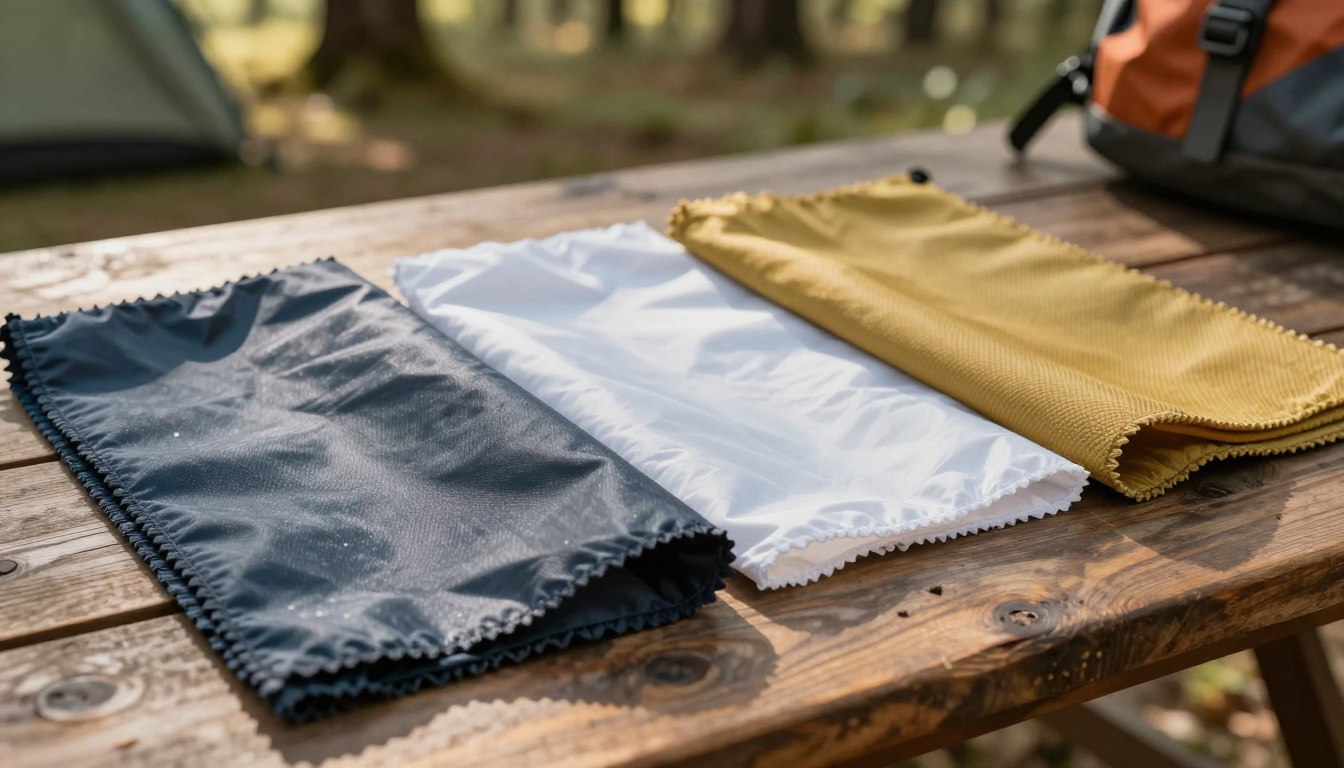
A close-up comparison of three fabric samples: 600D polyester, 420D nylon, and 900D polyester, displayed on a rustic wooden table outdoors. The 600D polyester sample is on the left, showcasing its slightly textured surface and durability, with subtle light reflecting off it, emphasizing its strength. The 420D nylon is in the middle, appearing smoother and lighter, while the 900D polyester is on the right, demonstrating a thicker and more robust weave. Soft, natural light filters through surrounding trees, creating a warm and inviting atmosphere. In the background, a blurred camping scene suggests outdoor use, with a subtle hint of backpacks casually placed nearby. The angle captures the vibrant colors and detailed textures of each fabric, highlighting their unique characteristics without any text or overlays.
When to Choose Each Denier Rating for Your Backpack Needs
Knowing when to pick 420D, 600D, or 900D polyester fabric is key. It depends on how you plan to use your backpack, your preference for weight and durability, and the weather it will face.
Choose 420D for Ultralight Travel and Daily Commutes
The 420D polyester fabric is great for light gear for daily commutes or ultralight travel. Its lesser denier rating means a lighter backpack. It's perfect for short trips or daily use without heavy loads.
But, 420D fabric isn't as durable as higher denier ratings. It's best for places where your backpack won't face harsh conditions or heavy use.
Choose 600D for Versatile All-Purpose Use
600D polyester is a good middle ground between light and durable. It's good for daily use, travel, and outdoor activities. It offers protection and is easy to carry.
The 600D fabric can handle regular wear and tear. It's light enough but strong enough for everyday use. It's a reliable choice for all-purpose backpacks.
Choose 900D for Extreme Conditions and Heavy-Duty Applications
For maximum durability and a bit more weight, 900D polyester is the best. It's made for tough use and extreme conditions. It's ideal for rugged outdoor activities or heavy use.
The high denier rating means it's very resistant to wear and tears. It protects your gear for a long time.
Additional Factors to Consider Beyond Denier
Denier rating is important, but not the only thing to think about. Other factors like water resistance, UV protection, and the backpack's overall quality are also key. They affect how well the backpack performs and lasts.
So, when picking a backpack, think about these extra factors. This ensures your choice meets your needs.
Conclusion
We've looked into 600D polyester fabric, a top pick for backpacks. It's known for being tough yet light. Knowing about the denier rating helps us choose the right fabric for our needs.
600D polyester is great for many uses, from daily tasks to outdoor adventures. It's strong against scratches, tears, and water. This makes it a solid choice for backpacks.
When picking a backpack, think about the fabric. Whether for daily trips, travel, or heavy use, the right fabric matters. Knowing the differences in denier ratings helps us find a backpack that lasts and performs well.
FAQ
What does the "D" in 600D polyester actually stand for?
The "D" means Denier, a measure of thread thickness in the textile industry. 600D polyester is a good weight for quality and durability without being too heavy. It's a top choice for its balance of lightness and toughness.
Is 600D polyester considered a water-resistant fabric?
Yes, it is! 600D polyester from brands like The North Face or Carhartt has a special coating. This makes it very water-resistant, perfect for keeping things dry in the rain.
How does 600D compare to 900D when looking for heavy duty polyester?
900D is better for extreme conditions because it's thicker and more abrasion resistant. But, 600D polyester is great for everyday use. It's strong enough for daily wear but easier to carry than 900D.
Why should we choose 600D over 420D for a school or work backpack?
A: 600D polyester lasts longer than 420D, making it better for daily use. 420D is good for light travel but can't handle heavy loads. 600D keeps your bag looking good even when it's full.
What are the common applications for this fabric beyond just backpacks?
A: 600D polyester is very versatile. It's used for high-quality luggage, gear bags, and camera cases. It's also great for outdoor seat covers and tool organizers because it's so strong.
How long can we expect a backpack made of 600D polyester to last?
A backpack made from 600D polyester can last many years. It's a heavy duty polyester that doesn't thin or fray easily. Bags from JanSport can last a decade or more with proper care.
Contact
Leave your information and we will contact you.


