English
Is Polyester Waterproof? What Bag & Backpack Buyers Should Specify
Created on 03.16
Many of us worry about our gear during a sudden rainstorm. We often ask, is polyester fiber waterproof when selecting a new bag for the daily commute. Our team knows that keeping your items dry remains a top priority. We want to help you navigate the confusing world of outdoor fabrics.
is polyester fiber waterproof
Choosing the right material feels straightforward once you learn the basics of construction. A high-quality liquid-resistant coating can make a huge difference in heavy weather. We notice that shoppers often miss the ratings that show real protection. Our guide looks at these specifications to help your shopping experience.
Understanding how weaves and treatments work helps us pick better products. We look at the tiny details that keep moisture out effectively. Let us explore the technical details together. This knowledge helps you buy gear that lasts through every season.
We want you to feel confident in your choice. Finding a sturdy pack shouldn't be a guessing game. Our research points to several factors that guarantee your items stay safe from the elements.
Key Takeaways
- Standard weaves only resist light moisture naturally.
- Specific coatings enhance how a bag handles heavy rain.
- Always check for sealed seams to ensure total protection.
- The denier rating affects the overall durability of your gear.
- Look for extra layers that provide a moisture barrier.
- Proper care maintains the liquid-repellent traits over time.
Is Polyester Fiber Waterproof? The Short Answer
Polyester fiber is often chosen for its water-resistant qualities. But is it really waterproof? The answer is simple: polyester fiber itself is not inherently waterproof. Yet, it can become water-resistant or waterproof with the right treatments and coatings.
Polyester fabric naturally resists water because it's synthetic. Experts say,
"Polyester's water resistance comes from its tight weave and hydrophobic nature. This makes it less likely to soak up water than natural fibers."
But, it's not fully waterproof without extra treatments.
To make polyester fabric waterproof, manufacturers use coatings like polyurethane (PU) or durable water repellent (DWR) finishes. These treatments boost the fabric's water resistance. This makes polyester great for outdoor gear where water is a problem.
To wrap it up, polyester fiber is not waterproof on its own. But, with the right treatments, it can become very water-resistant or even waterproof. This makes it a great choice for bags and backpacks for different uses.
Understanding Polyester's Natural Water Resistance
It's important to know how polyester reacts with water to understand its water resistance. Polyester is a synthetic fabric known for being durable and resistant to many environmental factors. But, its natural water resistance is a topic of debate among both consumers and manufacturers.
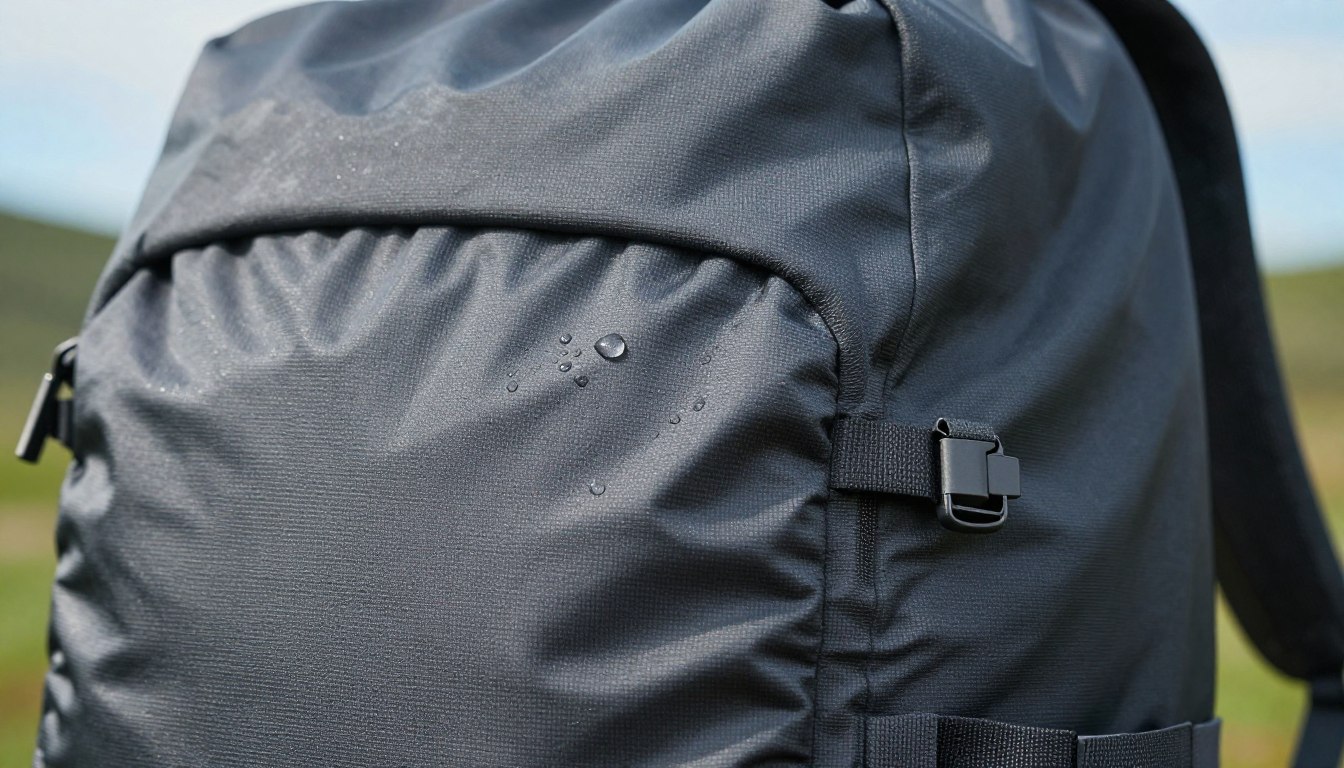
A close-up view of a textured polyester fabric showcasing its water-repellent qualities, illuminated by soft, diffused lighting that highlights the surface sheen. The foreground features droplets of water beading on the fabric, demonstrating resilience against moisture. In the middle ground, a well-designed, stylish backpack made of the same material can be partially visible, suggesting practicality and outdoor use. The background includes a blurred natural setting with hints of greenery and a subtle blue sky, evoking an adventurous spirit. The overall mood should convey a sense of durability and reliability, perfect for outdoor gear, with a sharp focus that enhances the intricate texture of the polyester.
Polyester fabric has certain traits when it comes to water. Polyester's hydrophobic nature makes it repel water, but it's not always waterproof. The fabric's weave, thickness, and any treatments it gets during making can greatly affect its water resistance.
How Polyester Fabric Behaves Around Water
Polyester fabric acts in a specific way when it meets water. At first, it may resist water because of its hydrophobic properties. But, if water stays on it long enough or if there's enough pressure, it can go through the fabric. This is key to figuring out if polyester is good for places where water is a problem.
A study on polyester's waterproofing shows how important coatings and treatments are for better water resistance.
The Difference Between Water-Resistant and Waterproof
It's important to know the difference between water-resistant and waterproof materials. Water-resistant materials can handle some water, but they're not completely waterproof. Waterproof materials, on the other hand, keep water out under certain conditions.
Polyester can be made more water-resistant or even waterproof with treatments like polyurethane (PU) coating or durable water repellent (DWR) treatment. Knowing this is key for people buying polyester products, like bags and backpacks, that need to work well in wet weather.
What Makes Polyester Waterproof: Coatings and Treatments
Polyester can resist water on its own, but special coatings make it even better. To fully waterproof polyester, manufacturers use various treatments and coatings.
Polyurethane (PU) Coating
Applying a polyurethane (PU) coating is a common way to waterproof polyester. This coating acts as a barrier, keeping water out. PU coating is popular because it's flexible and works well at keeping things dry.
Single-Layer vs. Double-Layer PU
PU coating can be applied in two ways: single-layer or double-layer. A single-layer PU coating offers basic waterproofing. It's good for light use. But, a double-layer PU coating gives better waterproofing and lasts longer. It's best for outdoor gear and heavy-duty bags.
- Single-layer PU coating: Basic waterproofing, suitable for light use.
- Double-layer PU coating: Enhanced waterproofing and durability, ideal for heavy-duty applications.
Polyvinyl Chloride (PVC) Coating
Another way to waterproof polyester is with a polyvinyl chloride (PVC) coating. PVC coating is known for its excellent waterproofing. It's often used in applications needing high durability and resistance to abrasion.
When PVC Coating Makes Sense
PVC coating is great for heavy-duty uses where the fabric faces harsh conditions. It creates a strong barrier against water and withstands wear and tear. But, PVC coating can make the fabric less breathable and may crack over time.
- Ideal for heavy-duty applications.
- Provides excellent waterproofing.
- Can reduce fabric breathability.
Durable Water Repellent (DWR) Treatment
Durable Water Repellent (DWR) treatment helps make polyester more water-resistant. DWR treatments cause water to bead up and roll off, preventing it from penetrating the fabric.
Limitations of DWR for Bags
While DWR treatments work well, they have their limits. Over time, the treatment can wear off, losing its effectiveness. For bags and backpacks used a lot, DWR may need to be reapplied to keep it water-repellent.
Laminated Waterproof Membranes
Laminating polyester with a waterproof membrane is another effective method. This process bonds a thin, waterproof layer to the polyester, making it both breathable and waterproof.
Knowing about the different coatings and treatments helps consumers choose the right waterproof polyester bags and backpacks. Whether for outdoor adventures or daily use, the right coating or treatment can greatly improve the product's performance and durability.
Key Specifications to Look for in Waterproof Bags and Backpacks
When looking for a waterproof bag or backpack, it's not just about the label. We need to check several important specs. This ensures the bag or backpack can really handle water.
Denier Rating and Fabric Thickness
The denier rating shows how thick and durable the fabric is. A higher rating means the fabric is thicker and more durable. This is key for water resistance in bags and backpacks.
Recommended Denier for Different Uses
For daily use, a denier of 200-500 is fine. But for hiking or camping, look for 1000 or higher. This is for more rugged use.
A close-up view of waterproof polyester fabric, showcasing its smooth, durable texture with a subtle sheen. The foreground features a folded piece of fabric draped elegantly, highlighting its water-resistant quality through droplets gliding off the surface. In the middle, a section of the fabric is unfurled, revealing its detailed weave and vibrant color, indicative of high-quality polyester. The background is softly blurred, suggesting an outdoor setting with hints of a rainy day, enhancing the waterproof theme. The lighting is bright and even, accentuating the fabric’s features while creating a polished and professional atmosphere. The angle is slightly overhead, allowing for a comprehensive view of the texture and craftsmanship, suitable for an informative context.
Waterproof Rating Measured in Millimeters
The waterproof rating is in millimeters (mm). It shows how much water pressure the fabric can take before leaking. This is vital for wet conditions.
What the Numbers Actually Mean
A 5,000mm rating is good for most outdoor activities. But for extreme or long water exposure, aim for 10,000mm or more.
Seam Construction and Tape Sealing
Seam construction is key for water resistance. Poorly sealed seams can let water in.
Welded Seams vs. Taped Seams
Welded seams are more waterproof than taped ones. But high-quality taped seams can also keep water out.
Zipper Type and Water Protection
The zipper type affects water resistance. Waterproof zippers keep water out through the teeth.
Roll-Top Closures as an Alternative
Roll-top closures are a great alternative to zippers. They seal the bag by rolling the top over and securing it. This creates a tight seal against water.
Comparing Polyester to Other Waterproof Bag Materials
Choosing the right material for waterproof bags and backpacks is key. Each material has its own strengths in water protection, durability, and price. We'll look at how polyester stacks up against other common materials.
Polyester vs. Nylon for Water Protection
Polyester and nylon are top picks for waterproof gear. They're both synthetic and can be treated to resist water.
Nylon is known for being tough and resistant to wear. However, polyester fabric waterproof treatments have improved, making polyester a strong contender.
Durability and Cost Considerations
Polyester and nylon have different strengths when it comes to durability and cost.
- Nylon is better at withstanding tears and punctures.
- Polyester is cheaper to make and buy.
Which one you choose depends on your needs and budget.
Polyester vs. Canvas and Cotton
Canvas and cotton are natural fibers that can be made water-resistant. However, they don't perform as well as synthetic materials like polyester in wet conditions.
Waterproof polyester fiber is more effective at keeping things dry than treated canvas or cotton.
Nevertheless, canvas and cotton have their own advantages. They are breathable and aesthetically pleasing.
When to Choose Coated Polyester Over Other Materials
Coated polyester is a wise choice for a combination of water resistance, durability, and cost-effectiveness.
It's great for bags or backpacks that might get wet but won't be underwater.
Coated polyester offers:
- Good water resistance
- Long-lasting durability
- A lower price tag than nylon or special waterproof materials
Thinking about these points helps you choose the right material for your needs.
Conclusion
We've looked into polyester and its role as a waterproof material. It's important to know how polyester works and how it's made water-repellent. This knowledge helps us make smart choices when we buy.
When you're looking for a waterproof bag or backpack, check for polyester with special treatments. Look for coatings like polyurethane or polyvinyl chloride. Or, see if it has durable water repellent finishes. These make polyester a good choice for keeping things dry.
Think about what you need the bag for. Are you going on outdoor adventures or just need something for daily use? Picking the right polyester water repellent fabric can really help.
Knowing about the materials and features of waterproof bags and backpacks helps us choose better. We can find something that fits our needs and likes.
FAQ
Is polyester fiber waterproof by itself?
No, polyester fiber isn't fully waterproof on its own. It's hydrophobic, meaning it doesn't absorb much water. However, it's not waterproof in its raw form. A standard polyester weave can shed rain but will let water through if not treated.
What makes a bag or backpack qualify as a waterproof polyester fabric?
To make regular cloth waterproof, manufacturers add special backings. Brands like The North Face use Polyurethane (PU) or Polyvinyl Chloride (PVC) coatings. This creates a barrier that keeps water out, even under pressure.
How does a DWR treatment help with polyester waterproof performance?
DWR stands for Durable Water Repellent. It's a chemical finish that makes water bead and roll off. While DWR is great, it's not enough for full waterproofing. Look for brands like Osprey that use DWR with internal coatings for better protection.
What is the difference between water-resistant and waterproof polyester?
Water-resistant means the fabric can handle light rain or a splash. Waterproof polyester can handle heavy rain or even brief submersion. Look for taped seams and laminated membranes for true waterproofing.
Why should we look for a specific millimeter (mm) rating on waterproof bags?
The mm rating shows how much water pressure the fabric can withstand before leaking. For example, a 5,000mm rating means it can withstand water five meters high. For extreme weather, look for ratings of 10,000mm or higher.
Are the zippers and seams important for polyester fabric waterproof integrity?
Yes! Even the best fabric will fail if water gets in through stitching or zippers. Look for seam taping or welded seams. High-quality bags also use YKK AquaGuard zippers to keep moisture out.
Is polyester better than nylon for water protection?
Polyester is often better for UV resistance and price. It doesn't stretch or sag when wet, keeping coatings intact. For heavy-duty use, consider high-denier polyester from brands like Carhartt.
How can we maintain the waterproof properties of our polyester gear?
The DWR finish can wear off over time. Clean your gear with specific soaps and reapply treatments like Nikwax TX.Direct. This keeps your fabric waterproof and protects the inner layers.
Contact
Leave your information and we will contact you.


